
Wittgenstein Lectures
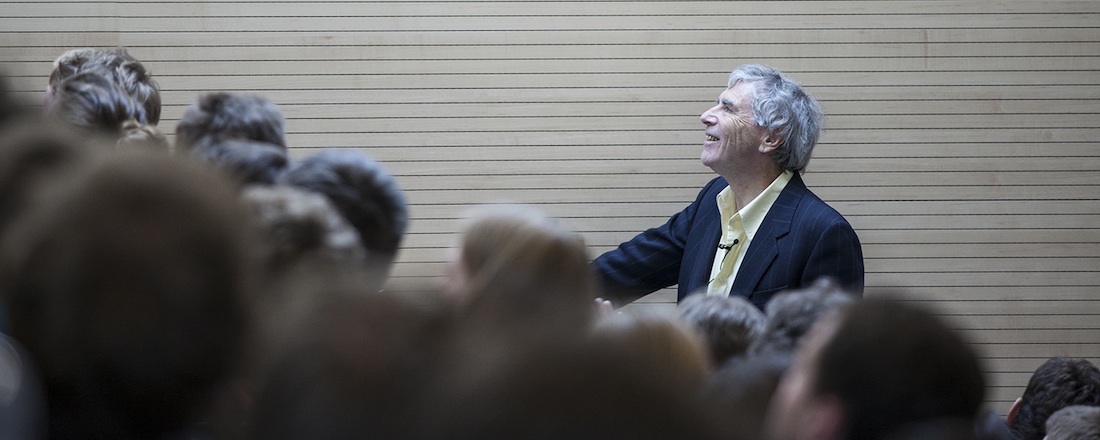
The Wittgenstein Lectures were inaugurated 1987. It was one of the first steps towards internationalization of teaching at the University. Traditionally we invite a renowned philosopher to hold a week of lectures and colloquia on themes central to our Philosophy & Economics programme.
All philosophy teaching stops for a week and the first lecture is usually followed by a reception. At the end of the series there is a short exam. Students get 2 ECTS for module CI1 (formerly V1). Sometimes we offer advanced seminar courses on the work of the Wittgenstein Lecturer.
The Wittgenstein Lectures are open to the public and all members of the University.
Wittgenstein Lectures 2026
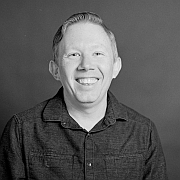
Kevin Zollman (Carnegie Mellon University):
Connected Intelligence: How our Social Ties generate Knowledge
June 15 - June 19 2026 [Time-table]
Day 1 / Monday, June 15 / 16.00-18.00 (st) / H25 (RW I) / Reception afterwards
Understanding complex social dynamics with simple models: The example of polarization
Comment by Leon Assaad (MCMP Munich)
Our social lives are marked by complex dynamics. Not only are many individuals interacting at once, but our actions often have multiplicative effects on the behavior of others. In this lecture, I will discuss the strategy of using simple computational models to gain insight into these dynamics. To illustrate this approach, I will present a new model of polarization that is remarkably simple yet captures one important driver of polarization: our tendency to spend time with like‑minded others. The day will conclude with a philosophical reflection on what we aim to learn when we study social phenomena through this modeling lens.
Day 2 / Tuesday, June 16 / 10.00-12.00 (ct) lecture, 12.00-13.00 (ct) Q&A / H 27 (GW II)
Individual rationality and social pathology: the case of pluralistic ignorance
Comment by Patricia Rich (University of Bayreuth)
Social epistemic pathologies plague our society, manifesting as polarization, pluralistic ignorance, the spread of fake news, and online mobbing, among others. Some scholars attribute these social pathologies to individual irrationality - for instance, arguing that fake news spreads because people are not careful consumers of news, or that polarization stems from irrational attachments to political positions. In this talk, I will argue that there may be purely social pathologies: epistemic problems that reside entirely at the “group level.” I will develop this argument through a case study of pluralistic ignorance, a phenomenon studied in social psychology, business, philosophy, and political science. When in a state of pluralistic ignorance, every person in a community privately disavows a belief they hold because they think others feel differently. Pluralistic ignorance, I argue, is consistent with individual rationality and can arise in completely rational communities. I conclude by discussing what the possibility of group-level epistemic pathologies means for how we address collective problems concerning knowledge and belief.
Day 3: Wednesday, June 17 / 10.00-12.00 (ct) lecture, 12.00-13.00 (ct) Q&A / H 27 (GW II)
Scientific Progress Through Bias
Comment by Max Noichl (Utrecht University)
In Science as a Process, David Hull makes the provocative claim that science progresses "through bias and commitment." Hull argues that individual biases lead to a more effective distribution of scientists across various research projects than if they were perfectly unbiased. This strong claim is difficult to test. While historical scientists have certainly exhibited biases and science has undeniably progressed, we lack a comparison class of perfectly unbiased scientists against which to evaluate Hull’s assertion. For this lecture, I present a model to illustrate the possibility of progress through bias. The model demonstrates that balanced biases can be the most effective method for preserving optimal cognitive diversity, but this result is fragile. In the context of the wrong social networks, such bias can be catastrophic. Hull’s paradoxical claim is thus plausible - science may be benefited by bias - but only under specific, favorable circumstances.
Day 4: Thursday, June 18 / 10.00-12.00 (ct) lecture, 12.00-13.00 (ct) Q&A / H 26 (GW I)
The transmission of information and misinformation
Comment by Bele Wollesen (Leibniz University Hannover)
It has long been known that information can spread in much the same way that diseases do. The same mathematical models are used to study how a new idea and a new virus infect a population. This lecture begins with the presentation of this model. As is familiar from COVID, we sometimes reconfigure our social networks to avoid getting infected by a virus. We do the same for information, but with the opposite goal: we want to maximize our chance of learning something important. Modeling the formation of networks for acquiring information reveals some odd patterns: in particular, people will self-organize into especially fragile social networks that rely on single sources of news, even when it is bad for the group.
Day 5: Friday, June 19 / 10.00-12.00 (st) / H 25 (RW I)
Reflection on the differences between individual and social epistemology
Comment by Dunja Šešelja (Ruhr University Bochum)
Throughout the week, we found several examples where individual and social epistemology point in opposite directions: what is best for the individual inquirer harms the group and vice versa. These problems have a similar structure to familiar economic dilemmas like the prisoner’s dilemma and public goods problem. What does this tell us about the philosophical project of understanding good and bad epistemic practice? I argue that this largely dissolves the distinction between “practical” and “epistemic” and brings many economic considerations into philosophy.
2025
Automating the Economic Style of Reasoning
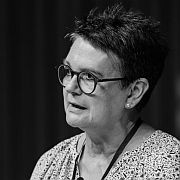
Diane Coyle
University of Cambridge
Abstract: Economic reasoning has shaped modern societies for more than half a century, but late 20th century growth has given way to 21st century discontent with consequences of this public philosophical order - consequences such as environmental crisis, inequality, and economic stagnation. At the same time the advent of public data-driven decision-making using machine learning and AI is automating the economic style of reasoning. Some see the technological tools as holding out the promise of a return to expansive economic progress. This series of lectures will set out these tensions of the moment, and discuss the implications of automated public decisions for the understanding of social welfare.
These Wittgenstein Lectures were accompanied by a panel discussion on "The Future of Philosophy and Economics in the Age of AI" which may still be viewed online here: https://mms.uni-bayreuth.de/Panopto/Pages/Viewer.aspx?id=f160e889-fd46-4808-b4bb-b30800ea79f0&query=3b1f27c4-11d3-48f6-ab9f-b306006e847e

2024
Addressing Structural Injustice, Changing Social Systems
2023
The Normative Significance of Axioloy
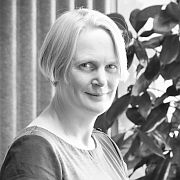
Hilary Greaves
University of Oxford

2022
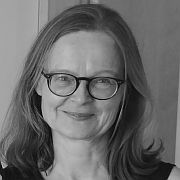
Labor's Self-Liberation from Capital
A. J. Julius
University of California, Los Angeles (UCLA)
2021
The Grounds of Political Legitimacy
Fabienne Peter
Warwick
2020
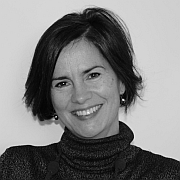
Network Epistemology: What Economics and Philosophy Tell Us About Learning in Groups (unfortunately, this event had to be cancelled due to the corona pandemic)
Kevin Zollman
Carnegie Mellon University
2019
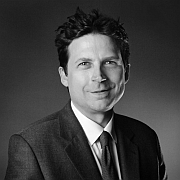
Blaming and Forgiving - The Work of Morality
Miranda Fricker
City University of New York Graduate Center
2018
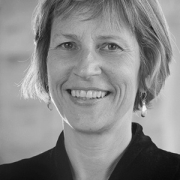
Climate Change and Obligations for Future Generations
Joseph Heath
University of Toronto
2017
Markets and Morality
Debra Satz
Marta Sutton Weeks Professor of Ethics in Society (Stanford University)
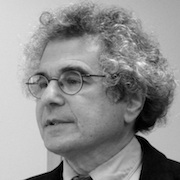
2016
Preference, Prediction and Policy
Daniel M. Hausman
Herbert A. Simon and Hilldale Professor University of Wisconsin-Madison
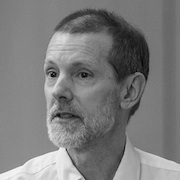
2015
Left Libertarianism: Promise and Problems
Peter Vallentyne
Kline Chair in Philosophy University of Missouri-Columbia
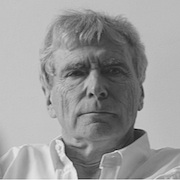
2014
The Ethics and Economics of Climate Change
John Broome
Emeritus White’s Professor of Moral Philosophy, University of Oxford
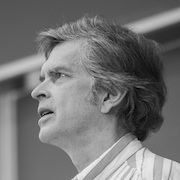
2013
The Revolution in Just War Theory
Jeff McMahan
White’s Professor of Moral Philosophy, University of Oxford
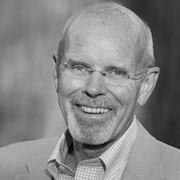
2012
The Robust Demands of the Good
Philip Pettit
Laurance S. Rockefeller University Professor of Politics
and Human Values at Princeton University

2011
Ethics and Public Policy
Jonathan Wolff
Professor of Political Philosophy, University College London
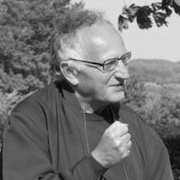
2010
Values, Norms, Decisions
Wlodek Rabinowicz
Professor (emeritus) of Philosophy, Lund University

2009
Collective Actions and the Commons: What Have We Learned?
Elinor Ostrom
Professor (emeritus) of Political Science, Indiana University
(Nobel Prize in Economics, 2009; †2012)

2008
Philosophy Amid the Darkness of These Times
Jonathan Glover
Professor of Philosophy, King's College, University of London

2007
From Rankings to Reasons
Michael Smith
McCosh Professor of Philosophy, Princeton University

2006
The Theory of (Un)Bounded Rationality: Games, Experiments and Evolution
Werner Güth
Max Planck Institute of Economics, Jena
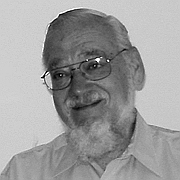
2005
Evolution, Learning and the Social Contract
Brian Skyrms
Distinguished Professor of Logic and Philosophy of Science and Economics at the University of California, Irvine
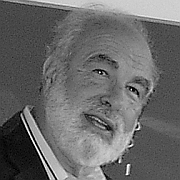
2004
Knowledge and Representation
Keith Lehrer
Arizona
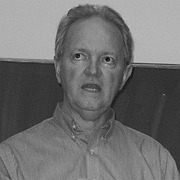
2003
David Hume as a Contemporary Political Theorist
Russell Hardin†
Stanford
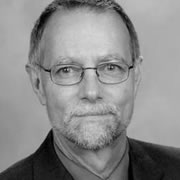
2002
Morality Meets Economics
Robert Frank
Ithaca
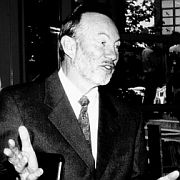
2001
The Economy of Virtue and Esteem
Geoffrey Brennan†
Canberra

2000
Der Wiener Kreis im Kontext

1999
Liberty, Property, and the Legitimacy of the State
Anthony de Jasay†
Oxford, Paris
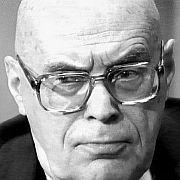
1998
Kritischer Rationalismus
Hans Albert†
Heidelberg

1997
The Mottled World. Lectures on the Unity of Science
Nancy Cartwright
London, LSE
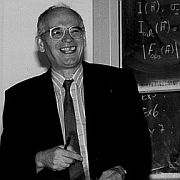
1996
Game Theory and the Social Contract
Ken Binmore
London, University College
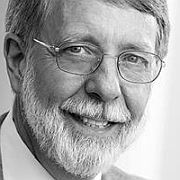
1995
Public Practical Reason
Gerald J. Postema
North Carolina, Chapel Hill

1994
Hume and Modern Philosophy
Richard M. Sainsbury
Austin, Texas

1993
Gerechtigkeit und Tugend
Onora O'Neill
Oxford